
Updated Information
Categories
Popular
How to Buy Real Estate in Japan as a Foreigner: A Complete Step-by-Step Guide
Property Knowledge

【Updated data in 2025】Japan’s Land Prices Continue to Surge, with Tokyo’s 23 Wards Leading the Growth
Market Information

Essential Knowledge for Property Investment in Japan (Part 1): Understanding Japan’s Earthquake Resistance Standards
Property Knowledge
Tokyo Rents Surge to 30-Year High: Why This Rising Trend Signals a Prime Investment Opportunity in the Property Market?
Market Information
Exploring Koenji: A Harmonious Blend of City Convenience and Creative Culture
Exploring Tokyo
Why Kamata area is the Next Hotspot for Property Investment in Tokyo?
Exploring Tokyo
Japan Rental Contracts Explained: Ordinary Lease vs. Fixed-Term Lease | A Guide for Overseas Property Investors
Many overseas investors evaluating Japanese real estate tend to focus on factors such as property prices, rental yields, and location. However, one important factor is often overlooked: the rental contract system itself. Even for properties with similar characteristics, the type of rental agreement can significantly affect rental stability, flexibility in adjusting rents, and the owner’s ability to utilize the property in the future. These factors can ultimately have an impact on overall investment returns.
In other words, investment success depends not only on the property itself, but also on the rental framework behind it. This article explains the differences between Ordinary Lease Contracts and Fixed-Term Lease Contracts, helping overseas investors develop a more comprehensive framework for evaluating Japanese real estate investments.
Introduction | Japan Rental Contracts: Why They Matter to Property Investors
Chapter 1 | Ordinary Lease Contracts: Japan’s Tenant-Stability-Centered Rental System
Chapter 2 | Fixed-Term Lease Contracts in Japan: Offers Flexibility for Property Owners
Chapter 3 | Ordinary vs. Fixed-Term Lease Contracts: Key Differences
Chapter 4 | The Rise of Fixed-Term Leases in Tokyo’s Luxury Housing Market
Chapter 5 | How Should Overseas Investors Evaluate Residential Investment Value Through Japan’s Rental System?
Conclusion | Understanding Lease Structures Is Essential to Investing in Japan Real Estate
Introduction | Japan Lease Contracts: Why They Matter to Property Investors?

When evaluating real estate investment opportunities in Japan, most overseas investors tend to focus on property price, rental yield, and location conditions. However, they often overlook another equally critical factor that has a profound long-term impact on investment performance: the lease contract system itself.
In reality, even two residential properties located in the same area with similar rental levels can produce significantly different outcomes depending on the type of lease contract applied. These differences can affect rental stability, rental revision flexibility, and the landlord’s future asset management options, ultimately influencing overall investment returns. Therefore, in the Japanese real estate market, what truly determines investment performance is not only “what property you buy,” but also “under which lease system the property operates.”
This article will begin with the fundamental structure of Japan’s rental system, analyze the core differences between the Ordinary Lease Contract and the Fixed-Term Lease Contract, and further explain their practical implications for landlords and overseas investors, helping investors build a more comprehensive analytical framework when evaluating properties.
Chapter 1 | Ordinary Lease Contracts: Japan’s Tenant-Stability-Centered Rental System
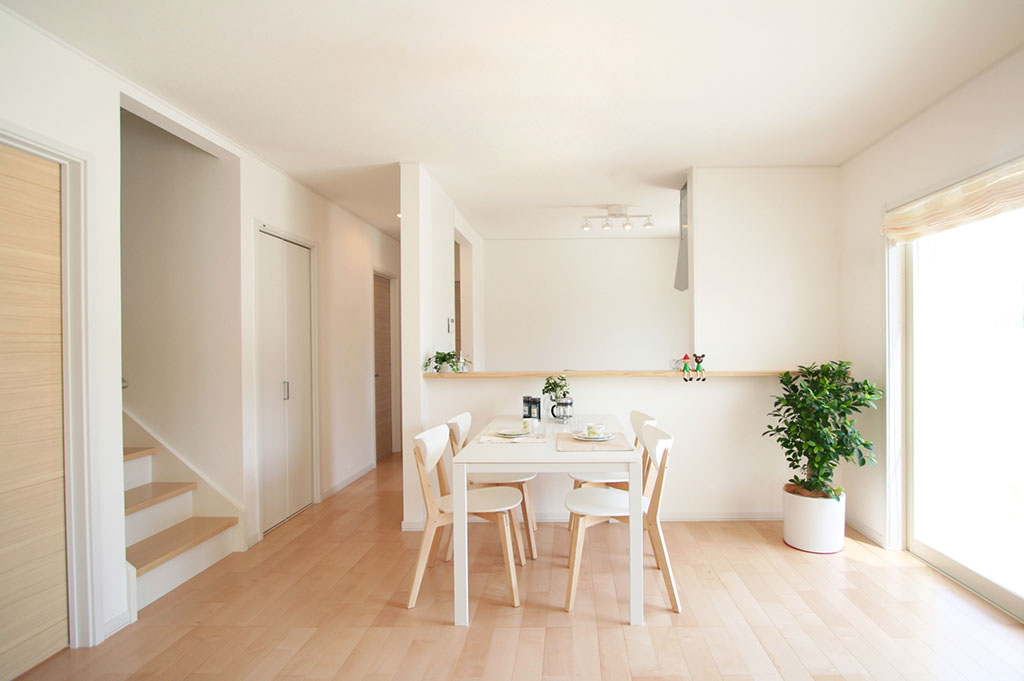
Basic Concept and Legal Framework
In Japan’s residential rental market, the Ordinary Lease Contract is the most common form of rental agreement. It is widely used by Japanese households and by tenants seeking long-term housing stability. This lease structure is governed by Japan’s Act on Land and Building Leases. Its central purpose is to protect tenants’ residential rights by allowing them to remain in their homes with a greater degree of long-term security, rather than requiring them to move out automatically at the end of each lease term.
For this reason, Ordinary Lease Contracts have long been the standard arrangement in Japan’s residential rental market. They are also the type of lease agreement that overseas residents are most likely to encounter when renting a home in Japan.
Lease Terms and Renewal
Ordinary Lease Contracts in Japan commonly have an initial term of two years. However, a two-year term does not mean that the tenant must vacate the property when the lease expires. Unlike rental systems in some countries, Ordinary Lease Contracts are generally renewable. Provided that the tenant continues to pay rent, complies with the lease terms, and does not commit any serious breach of contract, the tenant can generally renew the agreement and continue to reside in the property.
As a result, many households complete renewal procedures every two years while continuing to live in the same home for 10 years or longer. The stated lease term therefore functions primarily as a renewal cycle rather than as a fixed move-out deadline.
Landlord Restrictions and “Justifiable Grounds”
Overseas investors often ask a straightforward question: if the landlord owns the property, why can the landlord not simply require the tenant to leave when the lease term ends?
This question highlights one of the defining features of Japan’s Act on Land and Building Leases. Japanese law places substantial importance on residential stability, recognizing that a home is not merely an investment asset but also the foundation of a person’s daily life.
Under an Ordinary Lease Contract, a landlord who wishes to terminate the tenancy or prevent its renewal generally must provide advance notice and demonstrate “justifiable grounds”, as required by law.
Circumstances that may be considered relevant include:
- The building requires demolition and reconstruction because of significant deterioration.
- The landlord, or a close family member, has a genuine need to occupy the property.
- Other circumstances make continuation of the tenancy materially difficult or unreasonable.
Even where a landlord presents such grounds, a court may consider the circumstances of both parties. Relevant factors may include the tenant’s length of residence, the availability of alternative housing, the landlord’s need for the property, and the practical impact of termination on each party.
Consequently, a landlord generally cannot terminate an Ordinary Lease Contract simply because market rents have risen and the landlord wishes to replace the existing tenant with a higher-paying one.
Implications for Tenants
For tenants, the principal benefit of an Ordinary Lease Contract is its high level of residential stability. Families planning to work, live, or raise children in Japan over the long term may benefit from being able to remain in the same home without facing frequent relocation. This continuity can help preserve daily routines, community ties, and overall quality of life.
The benefit can be particularly significant for households with school-age children. Moving may affect a child’s school commute, friendships, extracurricular activities, and family routines. The ability to renew a lease and remain in the same neighborhood can therefore be an important practical advantage.
For these reasons, Ordinary Lease Contracts remain the preferred option for many Japanese households. Properties designed primarily for families and long-term residents are also commonly offered under this type of agreement.
Implications for Landlords and Investors
For landlords, Ordinary Lease Contracts offer both benefits and limitations.
On the positive side, a stable long-term tenant can reduce vacancy risk, lower tenant-replacement costs, and provide a consistent and predictable rental income stream. This can be especially attractive for owners seeking dependable cash flow rather than rapid turnover.
At the same time, the relatively strong legal protection afforded to tenants limits a landlord’s flexibility. Landlords may face constraints when seeking to recover possession of a property, adjust rental terms, or change the intended use of the asset.
As a result, Ordinary Lease Contracts are generally well suited to properties and investment strategies focused on long-term ownership, stable occupancy, and recurring rental income. They may be less suitable for strategies that depend on frequent tenant turnover, rapid rent increases, redevelopment, or short-term asset repositioning.
For overseas investors, the key value of an Ordinary Lease Contract lies in its potential to support stable, long-term rental income. However, investors should assess more than the monthly rent and expected yield. The underlying lease structure, the tenant’s legal protections, and the owner’s ability to recover possession or reposition the property should all form part of the overall investment analysis.
Understanding both the advantages and limitations of Japan’s Ordinary Lease Contract system is essential to balancing stable income, long-term asset value, and investment flexibility.
Chapter 2 | Fixed-Term Lease Contracts in Japan: Flexibility for Property Owners

System Background: A Market-Oriented Reform Introduced in year 2000
Compared to the long-established Ordinary Lease Contract, the Fixed-Term Lease Contract is a relatively new system introduced in Japan in 2000. It was designed to improve market liquidity and provide landlords with greater flexibility in managing their assets. In recent years, as Tokyo’s rental market continues to strengthen, an increasing number of newly built residential properties, luxury apartments, and centrally located residences have adopted Fixed-Term Lease Contracts, making it an increasingly important topic in the market.
Contract Structure: A Clearly Defined Expiration System
The most distinctive feature of the Fixed-Term Lease Contract is that it terminates automatically upon expiration. Unlike Ordinary Lease Contracts, there is no automatic right of renewal. If tenants wish to continue living in the property, they must renegotiate a new contract with the landlord. In other words, renewal is not a legal entitlement but a matter of mutual agreement between both parties.
Policy Objective: Enhancing Asset Management Flexibility
The original purpose of this system was to address situations where landlords were discouraged from renting due to the restrictive nature of Ordinary Lease Contracts. By clearly defining lease terms in advance, landlords gain greater flexibility in planning future decisions such as selling, occupying, renovating, or re-leasing the property.
Additionally, landlords can reprice rent at the end of each contract term to reflect current market conditions, enabling rental income to remain aligned with market trends.
Market Trend: Structural Changes in Tokyo’s Housing Market
In recent years, the adoption rate of Fixed-Term Lease Contracts has been increasing in line with structural changes in Tokyo’s housing market. On one hand, central Tokyo continues to attract population inflows and corporate demand, maintaining strong rental demand. On the other hand, the increase in luxury housing supply and newly developed properties has created greater demand for flexible leasing structures.
Economic Factors: Inflation and Rising Costs Driving Change
Japan’s recent inflationary environment has also encouraged landlords to reconsider asset management strategies. Rising costs in construction, maintenance, and property management have increased pressure to adjust rents more actively. In this context, Fixed-Term Lease Contracts provide landlords with a structured opportunity to reassess rental pricing and investment strategies at contract renewal.
Tenant Market Positioning: Not Inferior, but Different Demand Segments
It is important to note that Fixed-Term Lease Contracts do not imply lower tenant rights or lower property quality. In fact, in central Tokyo, many branded residences, luxury apartments, and newly built high-end properties actively use this structure. For corporate expatriates, international students, and short-term professionals, this type of contract aligns well with their housing needs.
Investment Perspective: Asset Control and Repricing Capability
From an investment perspective, the main advantage of Fixed-Term Lease Contracts is the enhanced control over asset pricing. Landlords can reassess market rent at the end of each contract term and adjust strategies accordingly, including renovation, sale, or repositioning of the asset. However, not all properties are suitable for this structure, and its effectiveness depends on tenant demand and property positioning.
Market Conclusion: A Dual-System Rental Structure
For family-oriented residential properties that prioritize long-term occupancy stability, Ordinary Lease Contracts remain highly competitive. Going forward, Japan’s rental market is expected to continue evolving into a dual-system structure where both contract types coexist and are applied flexibly depending on property characteristics and market demand.
Chapter 3 | Ordinary vs. Fixed-Term Lease Contracts: Key Differences

To clearly understand the differences between the two rental systems, the following comparison outlines the main structural distinctions. These differences do not indicate superiority, but rather reflect different design philosophies between residential stability and asset flexibility.
| Item | Ordinary Lease Contract | Fixed-Term Lease Contract |
| Contract Term | Typically 2 years, renewable | Fixed term, ends upon expiration |
| Renewal | Generally renewable | No automatic renewal |
| Termination by Landlord | Requires “just cause” | Ends automatically at expiry |
| Rent Adjustment | Limited flexibility | High flexibility |
| Legal Protection | Strong tenant protection | Contract-based structure |
| Suitable Tenants | Long-term families/individuals | Short-term or corporate tenants |
| Investment Style | Stable cash flow assets | Flexible pricing assets |
From a structural perspective, the Ordinary Lease Contract prioritizes residential stability, making it the predominant form for family housing in Japan. By contrast, the Fixed-Term Lease Contract emphasizes a clearly defined end date and greater flexibility, making it better suited to centrally located or high-end properties that tend to experience higher tenant mobility.
From an investment perspective, Ordinary Lease Contracts offer stable income and lower vacancy risk, but provide less flexibility in pricing. Fixed-Term Lease Contracts may involve higher tenant turnover, yet they allow landlords to reprice upon renewal and respond more quickly to market conditions. Ultimately, neither structure is inherently superior; the key is to align the lease type with the property’s positioning and overall investment strategy.
Chapter 4 | Tokyo’s Luxury Rental Market: Growing Use of Fixed-Term Leases

In recent years, Tokyo’s luxury residential rental market has undergone a notable shift. An increasing number of branded residences, newly built condominiums, and high-end rental properties are being offered under Fixed-Term Lease Contracts. This is more than a simple change in contract structure. It reflects broader shifts in Tokyo’s rental market, landlords’ asset-management strategies, and the evolving composition of housing demand.
The continued strength of Tokyo’s rental market is one of the key factors behind the growing use of Fixed-Term Lease Contracts. According to the latest survey, in FY2025, 34.9% of family-oriented rental properties of 70 sq m or more in Tokyo’s 23 wards were offered under Fixed-Term Lease Contracts, up 4.4 percentage points from the previous year.
The share was particularly high in Chiyoda Ward, at 71.3%, followed by Minato Ward at 57.3% and Shibuya Ward at 43.5%, all significantly above the level seen in other areas. In addition, the average asking rent for fixed-term rental properties reached ¥464,000 per month, representing a 7.0% year-on-year increase. By comparison, rents for properties under Ordinary Lease Contracts rose by 4.7%.
The ongoing rise in rents has been driven not only by population inflows into central Tokyo and steady rental demand, but also by rising property prices and higher home-purchase costs. Some households that had originally planned to buy homes are postponing their purchases and choosing to rent instead, helping sustain demand for high-quality residential properties. In a tight supply-and-demand environment, landlords have greater confidence in using Fixed-Term Lease Contracts. These arrangements allow them to reassess rents and reposition their properties upon contract expiry in response to changing market conditions.
Japan’s recent inflationary environment has also changed the way landlords manage their assets. Construction and maintenance costs, equipment replacement expenses, property-management fees, and labor costs have continued to rise. If rents cannot adequately reflect these higher costs over the long term, rental profitability may come under pressure. Therefore, Fixed-Term Lease Contracts, by contrast, allow landlords to review market rents and revise their asset strategies at the end of each lease term. This provides greater flexibility in rental management and is gradually making this contract structure more attractive to investors and professional landlords.
Tenant profiles in the luxury residential sector also support this trend. Central Tokyo is home to numerous multinational corporations, foreign-affiliated organizations, and international professionals. Corporate executives on assignment, overseas professionals, and diplomatic personnel often require housing for periods of three to five years, making them relatively receptive to fixed rental terms. At the same time, the growing supply of newly built residences has strengthened the competitiveness of high-quality properties. Even when offered under Fixed-Term Lease Contracts, these properties can continue to attract strong rental demand.
It is important to note that the increased use of Fixed-Term Lease Contracts does not mean Ordinary Lease Contracts will disappear. For family-oriented housing, where long-term residential stability is a priority, Ordinary Lease Contracts remain the mainstream option. Fixed-Term Lease Contracts, meanwhile, are becoming increasingly common for luxury residences in central Tokyo and other highly competitive properties.
For overseas investors, this shift represents more than a change in lease structure. It reflects the broader evolution of Tokyo’s rental market toward greater asset-management efficiency, leasing flexibility, and market-oriented property management. This is an important trend to consider when evaluating a property’s rental potential and long-term investment value.
Chapter 5 | How Should Overseas Investors Evaluate Residential Investment Value Through Japan’s Rental System?

For overseas investors, property price, rental yield, and location remain critical considerations. However, the lease contract structure is equally important in determining investment performance. It influences tenant duration, the ability to adjust rents, asset-management flexibility, and exit strategy. Neither Ordinary Lease Contracts nor Fixed-Term Lease Contracts are inherently superior; their suitability depends on the investor’s objectives.
If the goal is long-term, stable rental income, Ordinary Lease Contracts are generally more suitable because they tend to support higher tenant retention and lower vacancy risk. Conversely, for centrally located luxury properties or assets aimed at corporate expatriates and more mobile tenants, Fixed-Term Lease Contracts can offer greater flexibility in rent adjustments and asset repositioning.
However, investors should not evaluate a property based solely on its lease type. The ultimate determinants of performance remain the property’s fundamentals, including location, accessibility, building age, management quality, tenant demand, and long-term urban development potential. Even under an Ordinary Lease structure, properties in areas with stable demand can generate consistent returns. Conversely, weak property fundamentals cannot be offset simply by adopting a Fixed-Term Lease structure.
When acquiring income-producing properties with existing tenants, investors should carefully review the lease details, including the contract type, remaining lease term, rent-revision provisions, and renewal conditions. These factors directly affect the future asset-management strategy and potential exit options.
In conclusion, Japan’s lease system should not be viewed as a binary choice between “better” and “worse.” Rather, it reflects different market positions and management strategies. For overseas investors, the key is to align investment objectives, holding period, and risk tolerance with the most appropriate lease structure. By understanding market dynamics, tenant behavior, and lease mechanisms, investors can more accurately assess long-term investment value in Japan’s residential market and build a balanced portfolio that combines stable income with capital-appreciation potential.
Conclusion | Understanding Lease Structures Is Essential to Investing in Japan Real Estate
The Ordinary Lease Contract and the Fixed-Term Lease Contract reflect two distinct approaches within Japan’s rental market: residential stability and asset-management flexibility. The former prioritizes tenant protection and long-term occupancy, while the latter allows landlords to adjust pricing and asset strategies more dynamically in response to changing market conditions. As Tokyo’s housing market continues to mature, the rental system is evolving into a more segmented structure, in which both contract types coexist and are applied according to property characteristics and tenant profiles.
For overseas investors, the key question is not which system is superior, but what each structure represents in terms of market positioning and investment logic. By determining whether a property functions primarily as a “stable income asset” or a “flexible pricing asset,” investors can more accurately assess rental stability, vacancy risk, and long-term appreciation potential and develop a more resilient investment strategy in Japan.
Disclaimer: The investment views and opinions stated above are provided for informational purposes only and do not constitute any guarantee or assurance of investment performance or outcome. The Company assumes no responsibility or liability for the feasibility, legality, or implementation results of any business concept or investment strategy suggested herein. Investors are solely responsible for conducting their own due diligence and should consult the relevant governmental authorities and qualified professional advisors before undertaking any development or investment activities.
~END ~
・Recommended Articles
Property Knowledge2025.6.6
How to Buy Real Estate in Japan as a Foreigner: A Complete Step-by-Step Guide
Posted on 2022.9.22 > Updated on 2025.6.6 Basically, the procedure for buying real estate in Japan is more […]

Property Knowledge2022.7.4
NEW OR OLD? Which one is better for property investment in Japan?
Is it better to invest in a new construction property or a second-hand one?What are the factors affecting the […]
Property Knowledge2022.4.2
Why Reinforced Concrete (RC) Residential Building is good for long-term investment?
Buildings of reinforced concrete offer several advantages including long life and less maintenance, this is es […]
Exploring Tokyo2022.4.25
Basic Information of Tokyo Area
Tokyo is one of the metropolitan cities in the world. As a capital city of Japan, the city tops the population […]
Subscribe for Latest Property News
Don’t miss out! Subscribe now to stay tuned to the latest trends, news, and listings in Japan’s real estate market.


